Brain Health

They Finally Found The 7 Reasons Women Start "Losing Their Mind" After 40 — And None Of Them Are Dementia.

It's 2:14am and you're googling "early dementia at 45" again. Close the tab. What's draining women's minds after 40 is almost never that — it's seven quieter things. And two of them are fixable this week.

● What The Drain Looks Like
Lab-style rendering of the slow chemical drain — not damage, depletion. The tissue is fine. The fuel is gone. That difference is the whole story.

Every woman remembers her first one. The name that vanished mid-introduction. The reason you walked into the bedroom, gone before you crossed the doorway. The paragraph you read four times while your eyes did the work and your brain simply… didn't show up.

You laughed it off in public. Then you started keeping score in private. And somewhere between the third blank and the hundredth 2am ceiling-stare, a quiet, ugly question moved in: "Is this how it starts?"

Here's what the research actually says: it almost never is. What it usually is — according to a growing pile of neuroscience on the female brain at midlife — is a stack of seven separate drains, hitting at the same time, each one making the others worse. Nobody diagnoses them, because none of them are a disease. Your doctor calls it "stress," "hormones," or the classic — "welcome to your forties."

Seven drains. One decade. And the two biggest ones? You can start refilling them this week, without a prescription. Count yourself first:

How many are you?

  • You re-read the same paragraph three times before it sticks
  • You lose the word mid-sentence — it was right there
  • You walk into rooms and the mission deletes itself
  • The 2pm fog now shows up at 11am
  • You're wide awake at 3am reviewing everything you've ever said
  • You've stopped starting things you used to love
Tap every one that sounds like you.
1
The Estrogen Trapdoor
The one you can't fix over the counter

Nobody told you estrogen was doing brain work. For thirty years it quietly propped up your memory circuits, your mood chemistry, your processing speed. Then perimenopause pulls the lever — and the floor drops. Estrogen can fall by design, on its own schedule, years before your last period.

We're not going to pretend a capsule fixes hormones — that's a conversation for your doctor. But here's the part that matters: estrogen wasn't just doing its own job. It was regulating the next two drains on this list. When it lets go, they start bleeding out faster. Which means fixing #2 and #3 matters more after 40, not less.

2
The Drive Drain
✓ Fixable — the keystone

This is the big one. The chemical that vanished isn't your memory — it's your dopamine, the brain's "want" molecule. Dopamine is the difference between knowing you should start the laundry, the email, the business idea — and actually feeling the pull to do it. It's drive, focus, follow-through, and that quiet "I did it" hit when you finish something.

Dopamine production declines with age on its own. Estrogen falling (see #1) accelerates it. Chronic stress burns through what's left. The result is the feeling women describe in almost the same words, over and over: "I'm still me. I just can't make myself care the way I used to."

That's not a personality change. That's not depression, either — you can be perfectly happy and still have an empty drive tank. It's a raw-materials problem: your brain builds dopamine from specific amino acids, and most diets after 40 don't supply nearly enough of them. Hold that thought — because this one has a fix, and it's absurdly simple.

3
The Mineral Starvation
✓ Fixable — if you use the right form

Roughly half of Americans don't get enough magnesium — and women under chronic stress burn through it fastest, because stress literally dumps magnesium out of your body. Low magnesium shows up as exactly the things you've been blaming on age: tension you can't shake, a brain that won't downshift at night, irritability that doesn't feel like you.

Now the WTF part nobody tells you at the drugstore: the cheap magnesium in most supplements — magnesium oxide — barely gets absorbed, and it can't meaningfully reach your brain. You could take it for a decade and your brain cells would hardly notice. The form studied for actually crossing into the brain is magnesium L-threonate — a different molecule with a different job. Wrong form, wasted years. Right form, and drain #3 starts refilling.

4
The Cortisol Tax
The bill for holding everyone's life together

Twenty-some years of being the one who remembers everything — the appointments, the birthdays, the forms, the feelings of everyone in the house. That's decades of chronically elevated cortisol, and cortisol is a tax collector with two favorite targets: it suppresses dopamine signaling, and it burns magnesium.

Read that again. The stress of managing everyone else's brain has been quietly draining the two most fixable chemicals in yours. Drains #2, #3 and #4 aren't three problems — they're one spiral.

A brain on a steel table slowly compressed in a metal clamp, illustrating chronic cortisol pressure
The Cortisol Tax, rendered literally. Chronic stress never feels like an emergency — it feels like this: a slow clamp your brain learns to live inside.
5
The 3AM Robbery
Where your brain chemistry gets stolen

Wide awake at 3:07am, exhausted and buzzing at the same time, chairing a board meeting of every mistake you've made since 1997. Sound familiar? Fragmented sleep is practically a signature of the midlife female brain — hormones disrupt it, and low magnesium (#3) makes it worse.

Here's why it belongs on this list: deep sleep is when your brain restocks its chemistry for the next day. Every broken night is a robbery — tomorrow's focus, patience and drive, stolen in advance. You're not "bad at sleep." You're being robbed by drains #1, #3 and #4 while you lie there.

6
The Coffee Backfire
The fix that became a drain

Somewhere along the way, coffee stopped working. Now it just makes you jittery and foggy — the worst of both. That's because caffeine doesn't add anything to your brain. It borrows. It blocks the "I'm tired" signal while spending tomorrow's energy today, then hands the bill to your 3am self (see #5).

Millions of women are fighting a production problem with a stimulation tool. It's like revving an engine that's out of oil. The engine doesn't need more revving. It needs the raw materials it's been missing.

7
The Surrender Script
The one that locks in all the others

"I'm just getting older." You've started saying it as a joke. You don't mean it as a joke. And every time you say it, the script gets a little more permanent — because a woman who believes the fog is her new personality stops looking for the drain.

This is the reason the first six get to keep operating in the dark. Not biology — surrender. The women who get their sharpness back are almost never the ones with better genes. They're the ones who refused to accept "just aging" as a diagnosis and went looking for the two valves they could actually turn.

A pale brain preserved in a cloudy specimen jar on an institutional shelf, forgotten
What "I'm just like this now" actually does: takes a perfectly working brain and files it away on a shelf. Don't sign the script.

You Can't Fix #1. You Can Fix #2 And #3 This Week.

Recap the list. Hormones (#1) — that's between you and your doctor. Cortisol, sleep, coffee (#4–6) — those improve downstream when the chemistry underneath them recovers. Surrender (#7) — you're already fixing that by reading this far.

Which leaves the two valves you can turn yourself, starting this week: refill the dopamine your drive runs on (#2), and get the one mineral your brain is starving for — in the form that can actually reach it (#3).

For #2, there's a formula that's been quietly reordered by women for years: Dopamine Brain Food™ by Natural Stacks. It's not a stimulant — it's the opposite. Three capsules in the morning hand your brain the exact precursors it builds dopamine from: L-Tyrosine and L-Phenylalanine, plus the pre-activated B-vitamins (B6, B12, folate) that fire the conversion. No jitters. No crash. No prescription. Just the raw materials your "want" chemical has been missing since your thirties.*

Dopamine Brain Food capsules
Reader Offer · Up To 40% Off

Dopamine Brain Food™

★★★★☆ 4.2 · 684 reviews
$39.95
$23.97/mo
You save 40% with the 6-pack subscription
Get My Drive Back→ Cancel anytime · 100% money-back guarantee
✓ Third-Party Tested✓ Open-Source Verified
✓ Free Shipping $70+✓ No Proprietary Blends
100%
BACK
100% Money-Back Guarantee. Don't feel the difference? Get a full refund — the only risk is staying foggy.
Drain #3 · The Right Magnesium

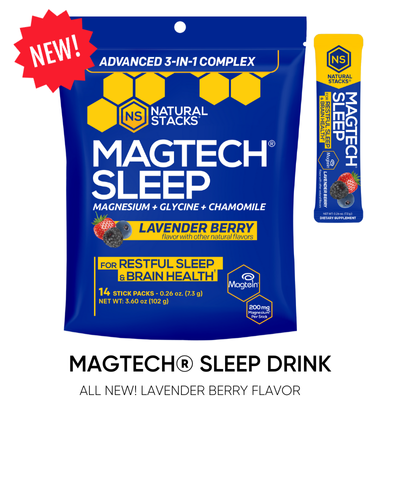
MagTech® Magnesium — the form that reaches your brain

If #3 and #5 hit hardest — the tension, the 3am board meetings — this is your second valve. MagTech® uses magnesium L-threonate (the form studied for crossing into the brain) plus glycinate and taurate, instead of the drugstore oxide your body mostly ignores.*

Get The Right Magnesium →
0%
of women 40+ report a drop in daily drive & focus*
0
brains helped by these formulas
0
reviews · 4.2★ average
"I spent two years thinking I was slipping. Turns out I wasn't losing my mind — my mind was running on empty. There's a difference."

Questions women ask before starting

Is this a stimulant? I'm done with jittery.

No — it's the opposite of a stimulant. Caffeine spends your brain's energy; Dopamine Brain Food™ supplies the amino acids and activated B-vitamins your brain uses to produce dopamine on its own. No buzz, no crash.*

How fast will I notice something?

Everyone's tank is different. Some women report a shift in drive and focus within days; for others it builds over a few weeks of consistent morning use. That's why the guarantee exists — you're never betting your own money on it.

What if it does nothing for me?

Then it costs you nothing. Every order is covered by a 100% money-back guarantee — feel a difference or get a full refund. The only unrecoverable cost is another year of "I'm just getting older."

Start Refilling The Tank→ Up to 40% off · Cancel anytime · Money-back guarantee
*These statements have not been evaluated by the Food and Drug Administration. These products are not intended to diagnose, treat, cure, or prevent any disease. This article is sponsored content published in partnership with Natural Stacks. It is not medical advice and is not a substitute for a consultation with a qualified physician — especially regarding hormones, sleep disorders, or persistent cognitive concerns. Statistics marked with an asterisk are illustrative of survey-style marketing data, not clinical findings. Imagery is illustrative rendering, not clinical photography. Individual results vary. If you are genuinely concerned about your memory, please see a doctor — that instinct is worth trusting.
Reader offer$23.97/mo
Get My Drive Back →